Buying for someone who has everything is frustrating for one simple reason: they already own the things they want, and they buy the rest themselves the moment they think of it. So every object you consider either duplicates something they have or becomes clutter they're too polite to return. The fix isn't to search harder for a gadget they're missing — it's to change the category of gift entirely.
Here is the takeaway up front: the best gifts for someone who has everything are the ones that can't pile up. Consumables that get used and enjoyed, an experience they'll remember, an upgrade to something they already use daily, or a personal touch only you can make. Those four moves — plus thoughtful presentation — turn "they have everything" from a dead end into an easy shortlist. Below is how to use each one, how to match the gift to the recipient, and the mistakes that get presents quietly re-gifted.
Why someone who has everything is actually hard to buy for
"Has everything" is rarely literal. It usually means one of three things: they can buy what they want the moment they want it, they're particular and hard to surprise, or they've reached a stage of life where they're trying to own less, not more. Notice that none of these is solved by finding a cleverer object.
This is why the usual approach backfires. Hunt for a physical thing they lack and you're competing with their taste and buying power — and losing. Anything within your budget that they'd truly want, they've likely already bought; anything they haven't, they may have skipped on purpose.
So flip the goal. Instead of asking "what does this person not own?", ask "what would they enjoy but never buy for themselves?" That second question points you toward gifts that don't accumulate — and those are the ones that land.
The four kinds of gifts that still land
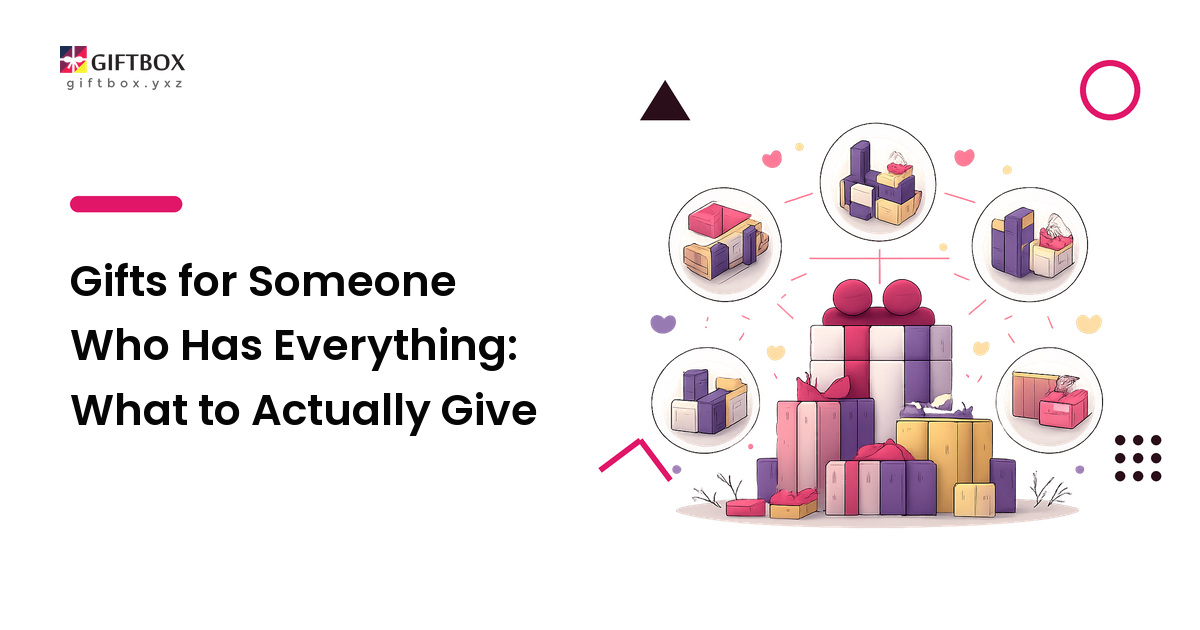
Almost every reliable gift for this kind of person falls into one of four types, each dodging the clutter trap in its own way:
- Consumables — things that get used up, so they never become stuff to store.
- Experiences — a memory instead of an object.
- Upgrades — a better version of something they already use daily.
- Personal and sentimental — the one category their money can't buy.
Pick the type first, based on what you know about them, then find the specific item. That order — category before product — keeps you out of the browse-for-hours trap. It's the same principle behind choosing any good present; our guide to choosing the perfect gift covers it in depth.
Give consumables they'd never splurge on
A consumable is anything that gets used up: good food and drink, fresh flowers, premium coffee or tea, a fragrance, quality candles, or artisan chocolate. Consumables are the single most dependable answer to "what to get someone who has everything," and the reason is structural — they can't become clutter. The gift is enjoyed and then it's gone, leaving a good memory instead of another object to find a home for.
The trick is to go one tier above what they'd routinely buy for themselves. Someone who drinks coffee every morning rarely springs for the small-batch beans or the beautiful pour-over kit; that's precisely the gap you fill. Aim for "everyday category, special version" — indulgent precisely because it's something they use and appreciate but wouldn't prioritize buying.
Give an experience, not another object
Experiences sidestep the clutter problem completely and tend to grow more meaningful over time. A cooking class, concert tickets, a tasting menu, a spa day, a museum membership, or a subscription they don't have yet — none of it adds to the pile, and all of it creates a memory with your name attached.
Experiences also flex to any budget and relationship — a coffee-and-pastry morning is an experience; so is a weekend away. For someone who has every object they could want, time and novelty are the scarce things. And if you share the experience, you're giving two gifts — the outing and your company — which is often what this person is actually short on.
Upgrade something they already use every day
Look at what the person touches daily — their wallet, water bottle, kitchen knife, headphones, or work bag — and give them a markedly better version of one specific thing. Daily-use items are easy to overlook and rarely replaced until they break, so a genuine upgrade gets used constantly and quietly reminds them of you.
This works because it isn't a new object competing for space; it replaces one they already rely on. The bar is quality, not novelty — a well-made version of a boring necessity usually beats an exciting gadget that ends up in a drawer. Pick something they use without thinking, then hand them the version they'd never bother to buy for themselves.
Make it personal — the one thing they can't buy
Here is the category no amount of money can replicate: a gift that's specifically about them, or about your relationship. A framed photo, a custom illustration of their pet or home, a monogrammed piece, a book inscribed with a note, or a donation to a cause they love in their name. The person who has everything can buy any product on earth — but they cannot buy the thought.
Personalization turns an ordinary item into "this could only have come from you." It's also the cheapest upgrade available: a handwritten note explaining why you chose the gift routinely outperforms a pricier but generic present. If you take one idea from this guide, take this one.
When in doubt, give a curated gift box
If you can't decide between a consumable, an experience, and a personal touch, a well-built gift box lets you combine them — and it's the lowest-risk answer for a hard-to-buy-for person. A box themed around something they enjoy (a coffee ritual, a relaxation set, a wine-and-snack pairing) delivers several small, no-clutter items around one clear idea, so even if one piece misses, the whole thing still reads as generous. You're not betting everything on one perfect guess, and you can build it yourself around a theme or start from a ready-made box and add a handwritten card to make it unmistakably from you.
What to avoid
A few instincts feel generous but backfire with this particular recipient:
- More of what they already own. A second nice watch or another gadget just competes with their own taste — and their taste usually wins.
- Generic luxury for its own sake. Expensive but impersonal reads as a transaction. Price is not the same as meaning.
- The obvious trendy gadget. If it's popular and useful, someone who buys what they want has likely bought it already.
- A bare gift card with no context. A fine ingredient, a weak whole gift here. If you give one, tie it to something specific — "dinner at the place you mentioned" — and add a note.
- Anything that adds a chore. High-maintenance objects, or things that need space and upkeep, burden someone trying to own less.
Use this quick guide to match the gift direction to what you already know about them:
| If they… | Best gift direction | Example |
|---|---|---|
| Buy every gadget the day it launches | Consumable or experience | Tasting menu; small-batch coffee |
| Are decluttering or minimalist | Experience or consumable | Concert tickets; fine chocolates |
| Are sentimental | Personalized / sentimental | Framed photo; custom illustration |
| Are always busy | Time, help, or a service | A meal delivered; a shared outing |
| Are genuinely impossible to read | Curated gift box | Themed box of small treats plus a card |
Frequently asked questions
What do you get someone who has everything?
Give something that can't pile up: a consumable they'll use and enjoy, an experience, an upgrade to something they already use daily, or a personalized gift. The goal isn't to find an object they're missing — it's to give something they'd enjoy but would never buy for themselves.
What's a good gift for a man who has everything?
Use the same framework: a shared experience (a class, tickets, a tasting), a real upgrade to a daily-carry item like a wallet or knife, a consumable a tier above his usual, or something personalized. Match the direction to whether he's a gadget buyer, a minimalist, or sentimental.
What do you get a woman who has everything?
Lead with the category, not the object: an experience you can share, a premium version of a consumable she loves, an upgrade to something she uses daily, or a personal, sentimental piece. A curated gift box around one theme is a reliable choice when you're unsure of her exact taste.
Is a gift card a good gift for someone who has everything?
On its own, it's a weak choice for this person, because "buy yourself anything" is exactly what they already do. It works far better paired with a specific suggestion and a note — for example, a card to a restaurant with "let's finally go" written inside — so it feels like a plan, not a shrug.
What are unique gift ideas for people who are hard to buy for?
The most genuinely unique gifts are personalized or one-of-a-kind: a custom illustration, a commissioned piece, a photo book, a letter, or a donation in their name. These are the only gifts your recipient literally cannot buy, no matter their budget, which is what makes them memorable.
How much should I spend on a gift for someone who has everything?
Spend on specificity and presentation before size. For this recipient especially, a modest gift that's clearly chosen for them beats an expensive one that could have gone to anyone — a thoughtful consumable with a handwritten note routinely outperforms a generic splurge.
Skip the guesswork with a ready-made box
The person who has everything is exactly who a curated box is built for: a few small, no-clutter items around one clear theme, ready to give. Explore curated gift boxes at Giftbox, pick a theme that fits your recipient, and add a handwritten note.