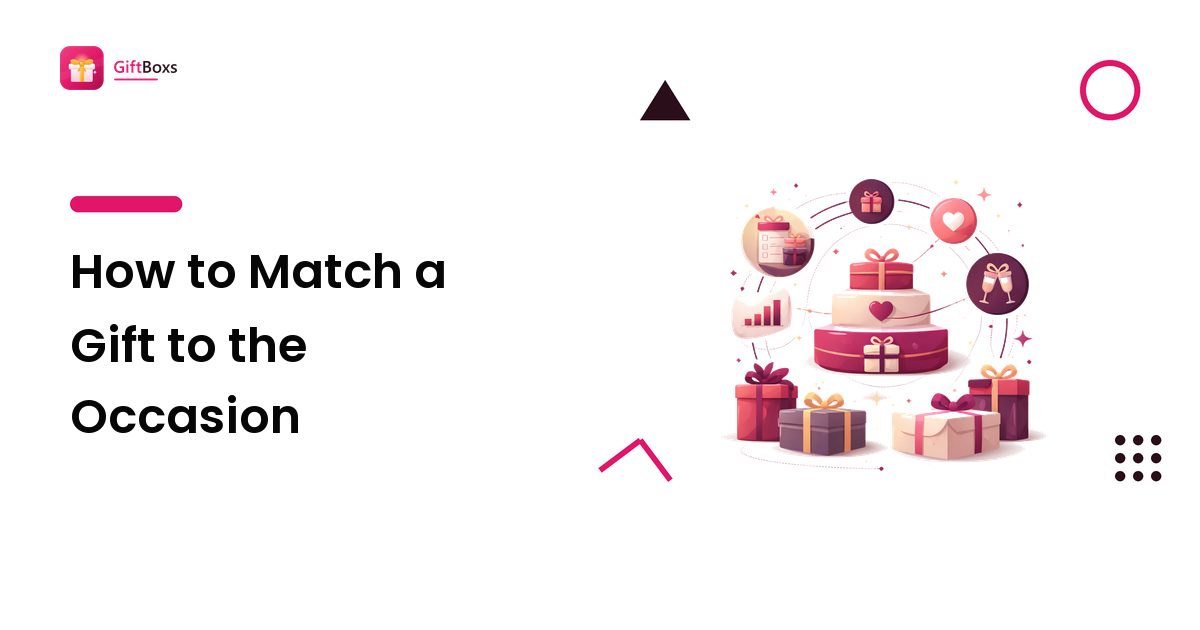
The same gift can be perfect for one occasion and completely wrong for another. A funny mug is a great birthday extra and a poor wedding present. A generous gift card reads as thoughtful for a graduation and a little cold for a close friend's birthday. Before you decide what to give, it helps to understand what the occasion itself is asking of you — because the moment quietly sets the rules for formality, budget, timing, and how personal the gift should feel.
The short version: read the occasion first, then choose the gift. Every occasion carries an unspoken brief — how formal it is, how close you're expected to be to the person, roughly what people spend, and when the gift should arrive. Once you can read that brief, picking something that lands gets much easier, and you stop second-guessing whether you've given too much, too little, or the wrong thing entirely.
Why the occasion changes the gift
A gift is never judged in a vacuum. It's judged against the moment it marks. That's why the occasion, not the object, is the real starting point.
Every occasion sets four expectations at once:
- Formality — how polished and traditional the gift should be. A wedding leans formal; a casual birthday among friends does not.
- Closeness — how personal you're expected to get. A sibling's milestone invites something meaningful; a coworker's invites something considerate but safe.
- Spend norm — the rough range people tend to give for that occasion and that relationship. You don't have to match it exactly, but ignoring it entirely is what makes a gift feel off.
- Timing — when it should arrive. Some occasions reward being early; others have a grace period; a few are unforgiving if you're late.
Get those four roughly right and almost any thoughtful gift will land. Get them wrong and even an expensive, well-chosen item can feel mismatched. If you're still deciding who the gift is even for and how to read them, start with our guide to choosing the perfect gift and use this piece to tune it to the occasion.
Read what the occasion is asking for
Before you shop, answer three quick questions. They turn a vague "what should I get?" into a focused brief.
- How formal is this moment? A retirement dinner and a group of friends grabbing drinks for a birthday sit at opposite ends. Formality tells you how traditional and how presented the gift needs to be.
- How close am I to this person, for this occasion? Closeness, not just relationship title, sets how personal to go. You might be a distant cousin but a close friend — gift to the closeness, not the label.
- What's the spend norm here, and where do I want to sit in it? You can sit at the low end and win on thoughtfulness, or the high end for someone truly important to you. What you want to avoid is landing far outside the range without a reason.
Hold those three answers in mind as you read the occasion-by-occasion guidance below.
Gifting by occasion
Birthdays
Birthdays are the most flexible occasion, which is exactly why they trip people up. The range runs from a card-and-a-treat for an acquaintance to a genuinely personal gift for someone close. The deciding factor is closeness, not the calendar.
For people you know well, lean personal: something tied to a shared memory, a hobby they're currently into, or an upgrade to something they use daily. For people you know less well, a broadly appealing consumable or experience is the safe, generous choice. Presentation matters more here than for most occasions, because a birthday gift is usually opened in front of you — the reveal is part of the gift.
Weddings and engagements
Weddings lean formal, and they come with the clearest conventions of any occasion. When there's a registry, use it — it's the couple telling you exactly what they want, and honoring it is the point, not a lack of imagination. If you'd rather personalize, a keepsake or an experience the couple can share together works, but pair it with something practical so the gift isn't purely sentimental.
Timing is generous but not unlimited: sending around the event, or within a reasonable window after, is expected. Spend usually rises with closeness to the couple, and group gifting is common and welcome for bigger-ticket items — pooling with others lets you give something substantial without overstretching.
Holidays and seasonal gifting
Holidays are defined by scale: you're often giving to many people at once, on the same deadline, within a set budget. That changes the strategy from "find the perfect thing" to "find a repeatable, thoughtful format." A theme you can adapt per person — a cozy set, a food-and-drink box, a small hobby kit — lets you personalize at volume without starting from scratch each time.
Timing is the real challenge. Shipping windows tighten as the season peaks, so the practical move is to decide on a format early and buy in one pass. For seasonal gifting across a list, a repeatable gift-box format is hard to beat — which is exactly where the gift-box approach earns its keep.
Milestones
Milestones — graduations, a new baby, a new home, a promotion, retirement — reward gifts that mark the transition the person is going through. The strongest milestone gift acknowledges the new chapter, not just the achievement.
- Graduation favors things that launch the next stage: something useful for a first job, a new home, or a fresh start, often paired with a practical cash-equivalent gift, which is genuinely welcome here.
- New baby favors the parents as much as the child — practical items they'll burn through, plus one keepsake, land better than another outfit the baby will outgrow in weeks.
- New home favors the space: something for the home that's a small upgrade on what they'd buy themselves.
- Promotions and retirement favor recognition — a keepsake, an experience, or something that honors what the moment means to them.
Because milestones are personal and often once-in-a-lifetime, this is an occasion where going a little more thoughtful, even at the same budget, pays off.
Sympathy, get-well, and thank-you
These quieter occasions are less about impressing and more about showing up. Restraint is the rule. For sympathy, practical comfort — food that feeds a grieving household, something soothing — says more than anything elaborate. For get-well, small and cheering beats large and demanding. For thank-you gifts, the size should fit the favor: proportional and prompt matters more than expensive.
The common thread is care over flash. A simple, well-timed gesture with a genuine note almost always outperforms something bigger that arrives late or tries too hard.
How much to spend by occasion
There's no universal price for an occasion, and any specific number would be a guess dressed up as a rule. What actually decides your budget is the intersection of two things: how formal the occasion is, and how close you are to the person.
A useful way to think about it:
- Closeness sets the floor. The closer the relationship, the more the gift is expected to reflect effort — through thoughtfulness, not necessarily cost.
- Formality sets the ceiling. More formal occasions carry higher expectations, and group gifting exists precisely so you can meet them without overspending alone.
- When in doubt, spend on thoughtfulness before cost. A well-matched, well-presented gift at a modest budget reliably beats an expensive gift that misreads the moment.
If you're buying for someone whose taste you can't gauge — a new coworker, a plus-one, a distant relative — our guide to gifting for someone you don't know well covers how to stay generous while staying safe.
When a gift box fits any occasion
One reason gift boxes have become a default for so many occasions is that they flex to fit almost all of them. A box lets you build a theme around the moment — celebration, comfort, a fresh start — and scale it up or down for closeness and budget without changing the format.
That flexibility is most valuable when you're gifting at volume or under a deadline: holidays, corporate gifting, a wedding party. Choose one theme, adjust the contents per recipient, and every gift feels considered while your workload stays sane. For a single, personal occasion, a box lets you combine a standout item with small touches so the gift reads as abundant and intentional rather than sparse.
The key is to let the occasion set the theme. A "new home" box, a "congratulations" box, a "thinking of you" box — naming the moment first keeps every item pointed at the same idea instead of becoming a pile of unrelated nice things.
A quick occasion-matching checklist
- Name the occasion and its tone — celebratory, formal, comforting, congratulatory.
- Rate the formality — casual, semi-formal, or formal. This sets how polished the gift should be.
- Rate your closeness — acquaintance, friendly, or close. This sets how personal to go.
- Set your spend where formality and closeness meet, and consider group gifting for big-ticket moments.
- Check the timing — early (holidays), around the event (weddings), or prompt (thank-yous, sympathy).
- Choose the gift or box to match the theme, then present it to suit the moment.
Frequently asked questions
How much should I spend on a gift?
There's no fixed amount — it depends on how close you are to the person and how formal the occasion is. Closeness raises the expectation of thoughtfulness; formality raises the expectation of polish. When you're unsure, invest in matching the moment well rather than in a higher price, and consider group gifting for expensive occasions like weddings.
What's a safe gift when I'm not sure what someone wants?
Build around a broadly appealing theme made of consumables — a food-and-drink box, a coffee or tea set, a small comfort kit. These sidestep personal taste while still feeling curated, which makes them reliable for acquaintances, coworkers, and anyone whose preferences you can't read.
How early should I send a gift?
It depends on the occasion. Holiday gifts reward buying early because shipping windows tighten at peak season. Wedding gifts have a generous window around and after the event. Thank-you and sympathy gifts should be prompt — being timely matters more than being large.
Is a gift card thoughtful or lazy?
It depends on the occasion. For graduations, new jobs, and other fresh-start milestones, a cash-equivalent gift is genuinely useful and welcome. For close personal occasions like a good friend's birthday, pair it with one small personal item so it doesn't read as impersonal.
How do I gift for many people at once without it feeling generic?
Pick one adaptable theme and vary the contents per person. A repeatable gift-box format lets you personalize at volume — same idea, different details — so each gift feels considered even when you're buying for a long holiday or corporate list on a single deadline.
Next step
Start with the occasion, not the object: name the moment, rate its formality and your closeness, and let those set your spend, timing, and theme. Once you know what the moment is asking for, browse occasion gift boxes on Gift Boxs to fill the brief fast — a ready format you can tune to any birthday, wedding, holiday, or milestone on your list.