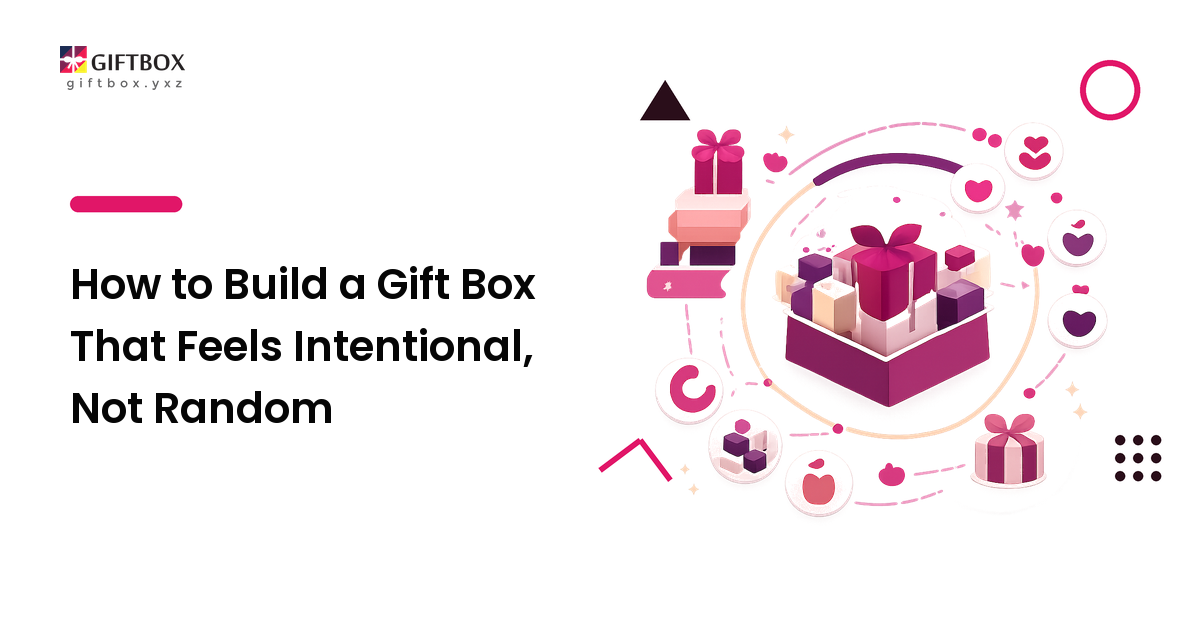
A great gift box feels like one idea, not a handful of random items dropped in a box. That difference — coherence — is what separates a present someone remembers from a pile of stuff held together by tissue paper. The good news is that building a cohesive box is a skill, not a talent. Once you have a theme and a simple structure to fill, the rest falls into place quickly.
The short version: pick one clear theme, choose a few items that genuinely belong together, vary their size and price so the box feels full and considered, and finish with presentation that ties it all up. Whether you build it yourself or buy a ready-made box, the same logic decides whether it lands.
What makes a gift box work
A bundle succeeds when every item points at the same idea. A "cozy night in" box, a "new home" box, a "coffee lover" box — the theme is the glue. When someone opens it, they should be able to say in one sentence what it is for, because that tells them you had them in mind rather than just a budget to spend.
The most common mistake is treating a gift box as a way to combine unrelated things you already wanted to give. Three good gifts with nothing in common feel scattered. The same three reworked around a single theme feel intentional. Coherence is worth more than quantity, which is why a tight box of four related items usually beats a crowded box of eight that don't talk to each other.
Start with a theme, not a shopping list
Before you buy anything, name the theme. The strongest themes come from one of two places: the recipient's interests, or the occasion.
- Interest-led: something the person already loves — gardening, baking, tea, skincare, reading, a particular sport.
- Occasion-led: the moment the box marks — a new baby, a housewarming, a graduation, a get-well, a thank-you.
- Mood-led: a feeling you want to give — relaxation, comfort, celebration, a fresh start.
The reason a theme comes first is simple: it turns an overwhelming "what do I buy?" into a focused "what fits a coffee ritual?" That second question is easy to answer and keeps every choice consistent. If you are still deciding who the box is even for, our guide to choosing the perfect gift is the place to start before you assemble anything.
The anatomy of a balanced box
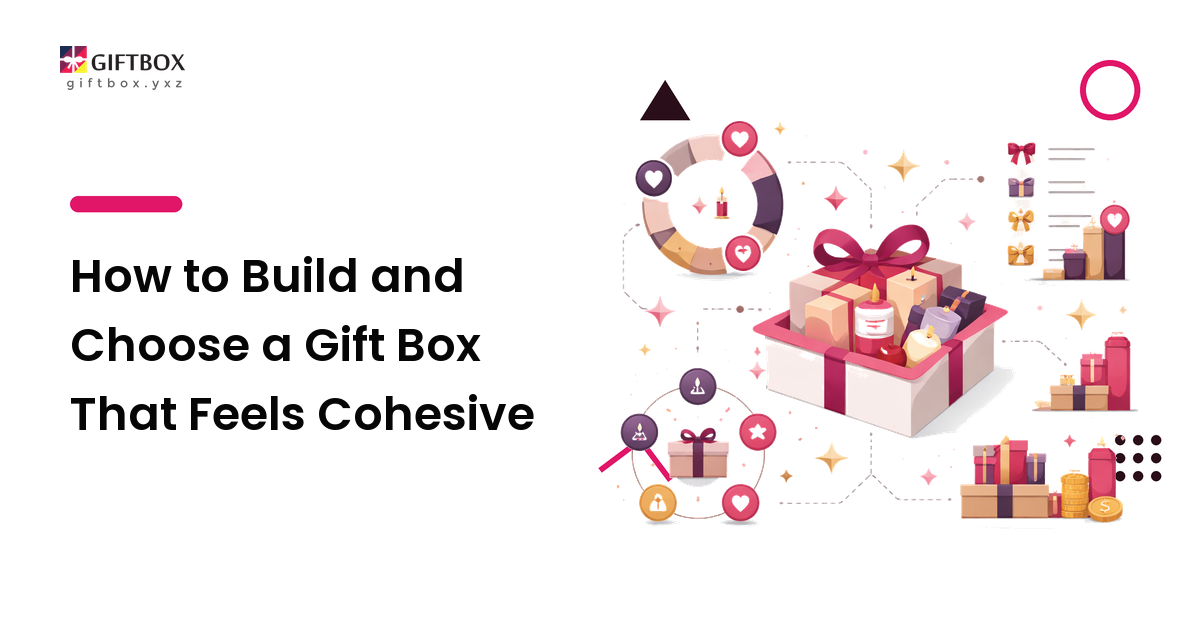
Cohesive boxes tend to share a structure. You don't need every layer, but the mix is what makes a box feel full and considered rather than thin or cluttered.
The hero item
One thing that anchors the box and carries the most value — the quality candle, the nice mug, the standout product. The hero sets the tone and is usually what the recipient remembers.
Supporting items
Two or three smaller items that extend the theme and make the box feel complete. Around a coffee hero, that might be good beans, a treat to go with the cup, and a small accessory. Supporting items add variety without competing with the hero.
A consumable
Something to eat, drink, or use up — chocolate, tea, a bath soak. Consumables make a box feel generous and give the recipient an immediate, low-stakes way to enjoy it. They also fill space honestly, which beats padding with filler.
A personal touch
A handwritten card, a monogram, or one item chosen for that specific person. This is the cheapest upgrade in the whole box and often the most powerful, because it proves the box was assembled for them.
Balance variety, size, and budget
A box that's all small items feels slight; a box with one big thing and nothing else feels empty. Aim for a range of sizes so the box looks full when opened, and vary price so you're not spreading your budget thin across identical-feeling items.
A simple way to allocate: put the largest share of your budget into the hero, a moderate share across the supporting items, and a small share into the consumable and the finishing touches. The reason this works is that the hero justifies the box while the smaller items create the sense of abundance — and abundance, not raw cost, is what reads as generous.
Keep practicality in mind too. Mix textures and shapes for visual interest, but make sure everything actually fits and won't crush in transit if you're shipping it.
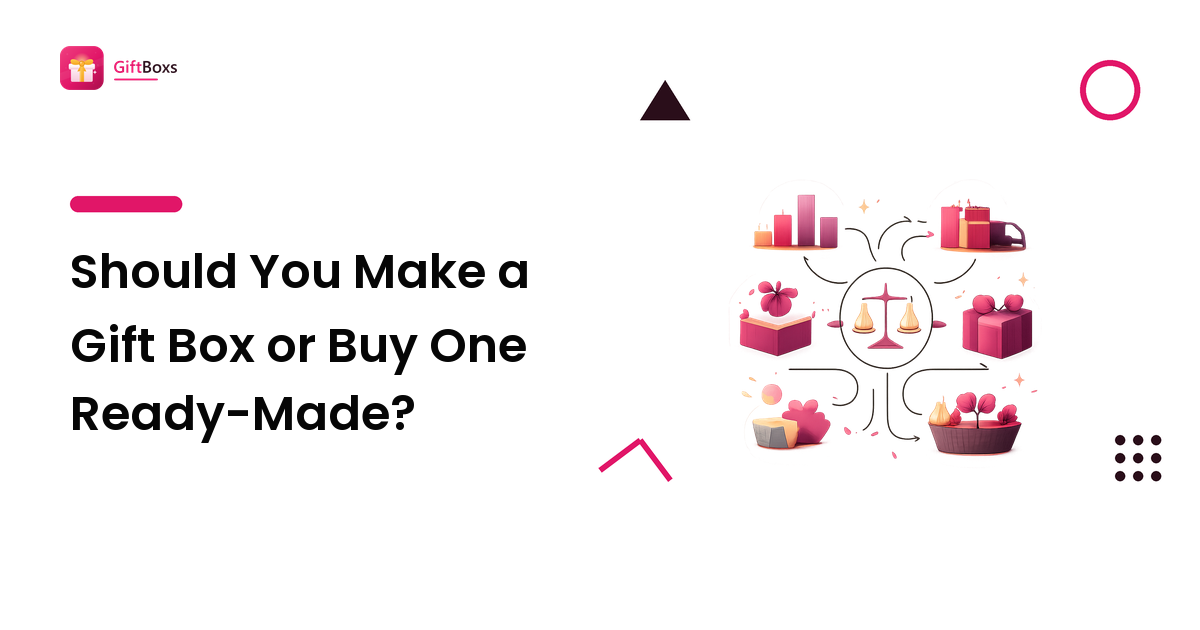
Build it yourself or buy ready-made?
Both are valid; the right call depends on time, effort, and how personal you want it.
- Build your own when you want full control over the theme, the budget, and the personal touches, and you have time to source and assemble. The upside is a box tailored exactly to one person; the trade-off is the effort of buying, packing, and presenting.
- Buy ready-made when you're short on time, sending to several people, or want a polished, professionally presented result. The upside is speed and consistency; the trade-off is less personalization — though adding your own card closes most of that gap.
For corporate or group gifting where you need many boxes to look identical and arrive on time, ready-made almost always wins on consistency and logistics. For a single, deeply personal gift, building your own is hard to beat.
Assemble and present it
Presentation is where a good selection becomes a great gift. Choose a sturdy box or container sized to your items — too big and the contents rattle around looking sparse; too small and it feels crammed. Add a base layer (shredded paper, tissue, or fabric) to cushion and lift items into view.
Arrange with the tallest item at the back and smaller ones in front so everything is visible the moment the lid comes off. The first look matters: a recipient should see the whole idea at once. Finish with a ribbon and a handwritten note naming why you chose it. That single line of context is what turns a nice box into a thoughtful one.
A quick build checklist
- Name the theme in one sentence (interest, occasion, or mood).
- Choose a hero item that anchors it.
- Add two or three supporting items that extend the theme.
- Include a consumable for instant, easy enjoyment.
- Add a personal touch — a card, a monogram, a tailored pick.
- Balance sizes and budget so the box feels full, not thin.
- Present it: right-sized box, a base layer, tallest at the back, ribbon, note.
Frequently asked questions
How many items should a gift box have?
There's no fixed number, but three to five well-chosen items usually hits the sweet spot. Enough to feel generous and complete, few enough that every item clearly belongs to the theme. Coherence matters more than count.
What should I put in a gift box?
Build around a theme with a hero item, a couple of supporting items, a consumable, and a personal touch. The mix gives the box variety and a sense of abundance while keeping everything pointed at one idea.
Are homemade gift boxes better than store-bought?
Neither is automatically better. Homemade boxes win on personalization and control; store-bought boxes win on speed, polish, and consistency — especially for multiple recipients. Adding your own card to a ready-made box gets you much of the personal feel either way.
How do I make a cheap gift box look expensive?
Spend on one quality hero item, vary the sizes so the box looks full, and invest in presentation: a sturdy right-sized box, a neat base layer, a ribbon, and a handwritten note. Abundance and finish read as thoughtful far more than a high price does.
What's a good gift box for someone I don't know well?
Choose a low-risk, broadly appealing theme built on consumables — a coffee or tea box, a small treats box, a relaxation set. These sidestep personal taste while still feeling curated, which makes them reliable for coworkers, clients, and acquaintances.
Next step
Start with the theme: write one sentence describing what your box is for, then choose a hero, a few supporting items, a consumable, and a personal touch around it. If you'd rather skip the sourcing, explore ready-made boxes at Giftbox and add your own note to make it personal.