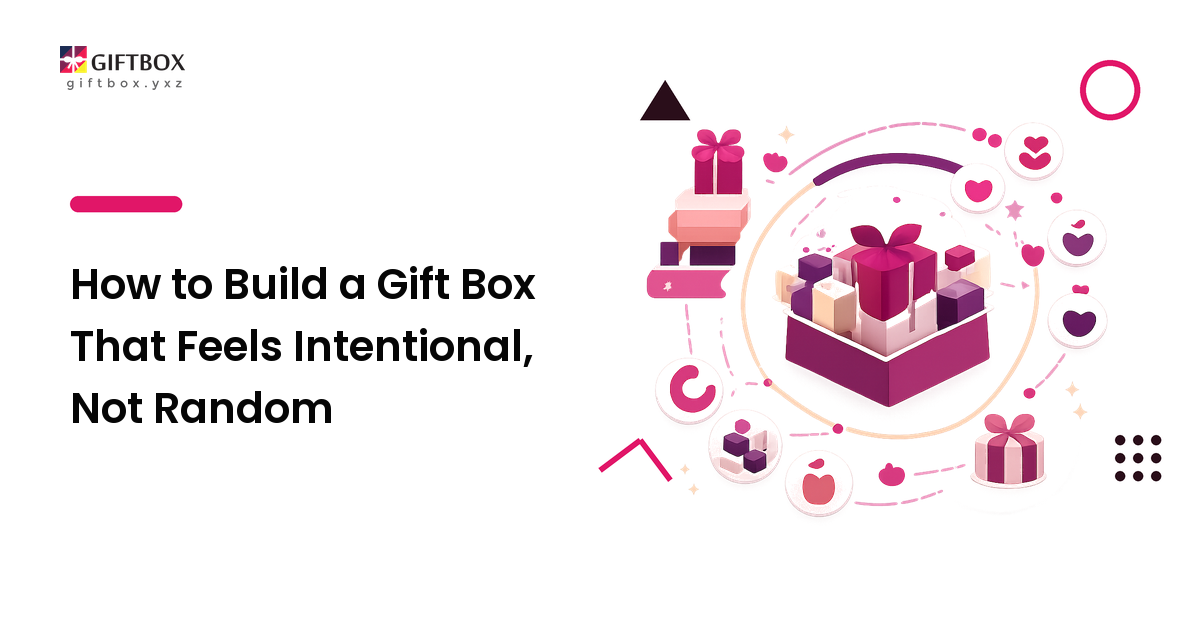
You can spend more on a homemade gift box than on a store-bought one and still have it land worse. The reason is almost never the budget. It's that a pile of individually nice items, dropped into a box, reads as "I bought some stuff" — not "I thought about you." The difference between a curated box and a random one isn't price or quantity. It's structure.
Here's the takeaway up front: a great gift box has one hero item and a small supporting cast that tells a single, coherent story. Everything else — filler, ribbon, the box itself — exists to serve that story. Get the structure right and a modest box outperforms an expensive jumble.
The hard problem: "nice things" don't add up to a gift
The instinct when building a box is additive. You see a candle you like, a nice tea, some chocolate, a notebook, a pair of socks — all good, all on theme-ish — and in they go. The result feels busy and unfocused, because the recipient's brain is doing extra work to figure out what the box is. There's no center of gravity.
A curated box flips the logic. Instead of asking "what nice things can I include?" you ask "what is this box about, and what's the one item that makes that obvious?" That single shift — from collecting items to telling a story — is what separates a box that feels intentional from one that feels like a raid on a gift shop.
The anchor-and-supporting-cast method
Think of a gift box like a small film. It needs a lead and a supporting cast, not five co-stars competing for attention.
Step 1: Pick the theme as a sentence
Before you buy anything, finish this sentence: "This box is for [their] [moment/ritual]." A cozy night in. A coffee ritual. A new-home starter. A first-week-of-a-new-job pick-me-up. The theme is a moment in their life, not a product category. This is the spine; every item earns its place by belonging to that moment.
Step 2: Choose one hero item
The hero is the most generous, on-theme piece — the thing they'd remember if everything else fell out. For a coffee ritual, it might be a quality bag of beans or a nice mug. The hero anchors the budget and the story. One hero, not three. If two items feel like co-leads, either split them into two boxes or demote one.
Step 3: Add three to five supporting items
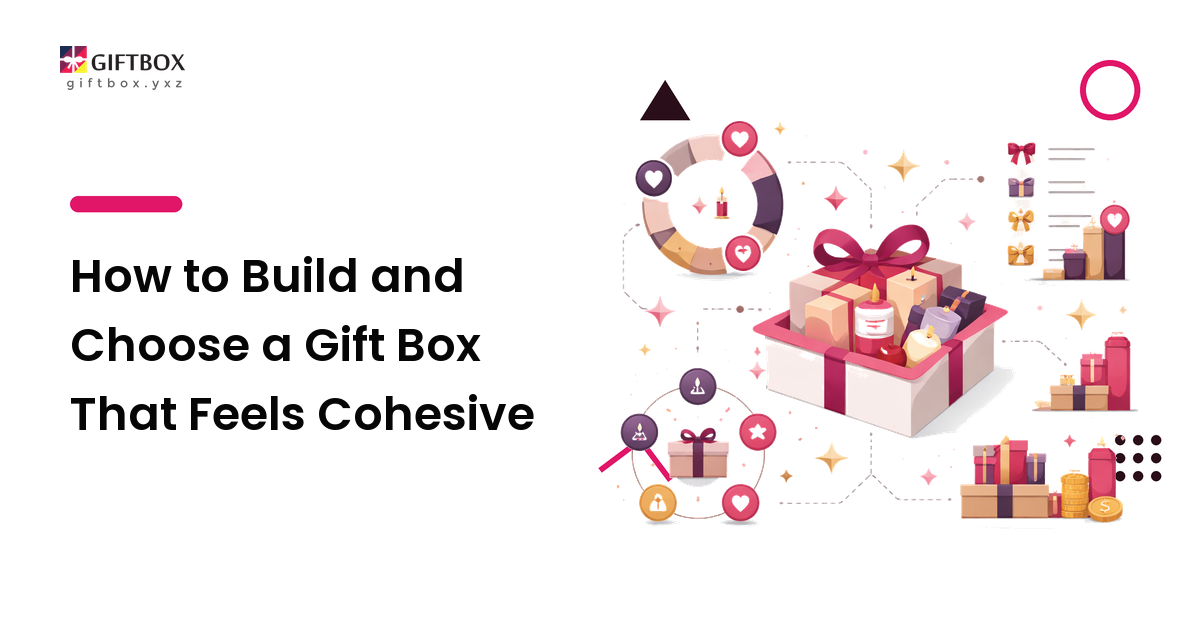
Supporting items should each do one of three jobs: complement the hero (something to use with it), complete the ritual (a small step that rounds it out), or delight (one unexpected, lower-cost extra). For the coffee box: good beans (hero), a nice mug (complement), a small treat to eat alongside (complete), and a playful sticker or note (delight). Notice the restraint — four items, one clear story.
Step 4: Vary texture, size, and height
Once the story works, make it look curated. A box where everything is the same size and shape reads flat. Mix a tall item with a flat one, something soft with something rigid, one bright element against neutrals. This is why a thoughtful box catches the eye before a single item is identified — the arrangement signals care.
A worked example: a $40 "new apartment" box that beats an $80 random one
Two boxes, same recipient, a friend who just moved.
The random $80 box: a scented candle ($25), a bottle of wine ($20), gourmet popcorn ($12), a succulent ($10), a keychain ($8), random tissue paper. Nice things. But there's no story — wine and a keychain and a plant don't connect — and the items rattle around because nobody planned the space.
The intentional $40 box: theme is "first cozy night in your new place." Hero: a soft throw blanket ($22). Supporting cast: a small candle ($8, complements the cozy mood), a bag of good hot chocolate ($5, completes the ritual), and a handwritten card naming the friend's exact street and wishing them well ($0, delight). Filler: crinkle paper that matches the blanket's tone. The blanket fills most of the box, so there's almost no void to disguise.
The $40 box wins decisively. It tells one clear story, the hero does real work, and the presentation looks deliberate because the box was planned around the hero's size, not assembled and crammed.
Solve the empty-space problem (the part everyone gets wrong)
This is the most common technical failure in DIY boxes: items shift in transit, the box looks half-empty, and the magic evaporates the moment it's opened. Two rules fix it.
First, size the box to the contents, not the other way around. People buy a big box because it feels generous, then can't fill it. A snug box that's full reads as more thoughtful than a large box that's sparse. Choose the box after you've chosen the items.
Second, use filler with intention. Crinkle paper, tissue, or fabric isn't just padding — it sets the height items sit at and keeps them from sliding. Build in layers: a filler base, the hero nested so its best face shows, smaller items tucked to fill gaps, and a final light layer so nothing peeks below the rim. The goal is a box that looks full and holds its arrangement when carried.
Common mistakes and why people make them
- Too many items. People equate quantity with generosity. It reads as clutter and dilutes the hero. Fewer, better items win.
- No hero. Without a lead, the eye has nowhere to land and the box feels like leftovers. Pick the one item the box is about.
- Theme as a category, not a moment. "Self-care stuff" is a category; "a slow Sunday morning" is a moment. Moments curate themselves.
- Buying the box first. An oversized box you can't fill is the single biggest presentation killer. Items first, box second.
For ready-made options and a fuller breakdown of curated bundles, see our gift boxes and bundles guide.
FAQ
How many items should a gift box have?
For most boxes, one hero plus three to five supporting items. The number matters less than the structure: every item should belong to one clear theme and serve the hero. Fewer well-chosen items beat a crowded box every time.
What should I use to fill empty space in a gift box?
Crinkle paper, tissue, or a piece of fabric, used in layers to set item height and stop sliding. But the better fix is choosing a box sized to your contents in the first place, so there's little space to disguise.
How do I make a cheap gift box feel expensive?
Give it one clear story with a single hero item, then invest in presentation: a snug box, intentional filler, varied textures, and a handwritten note. Cohesion and presentation signal care far more than total spend does.
Should I buy the box before or after the items?
After. A box bought first tends to be too big to fill, which makes everything inside look sparse. Choose your hero and supporting items, then pick a box that fits them snugly.
What makes a gift box feel "curated" rather than random?
A single theme tied to a moment in the recipient's life, one hero item that makes the theme obvious, and supporting items that each complement, complete, or delight. Random boxes collect nice things; curated boxes tell one story.
Build your box around one hero
Start with the moment, choose the one item that captures it, add a small supporting cast, and solve the space and wrapping last. That order is the whole trick. If you'd rather start from a ready-made, professionally curated box, explore the options at Giftbox and build from there.